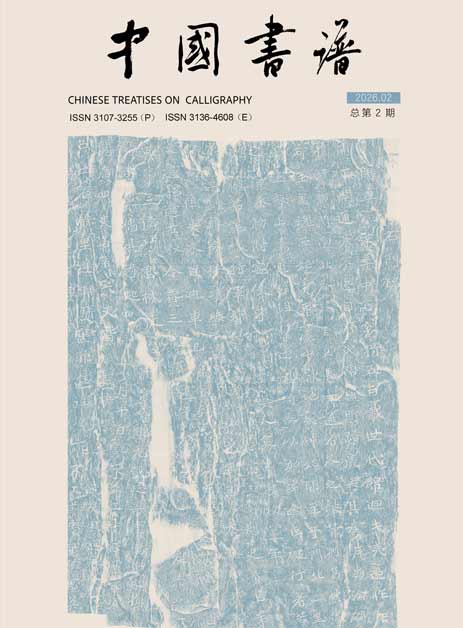
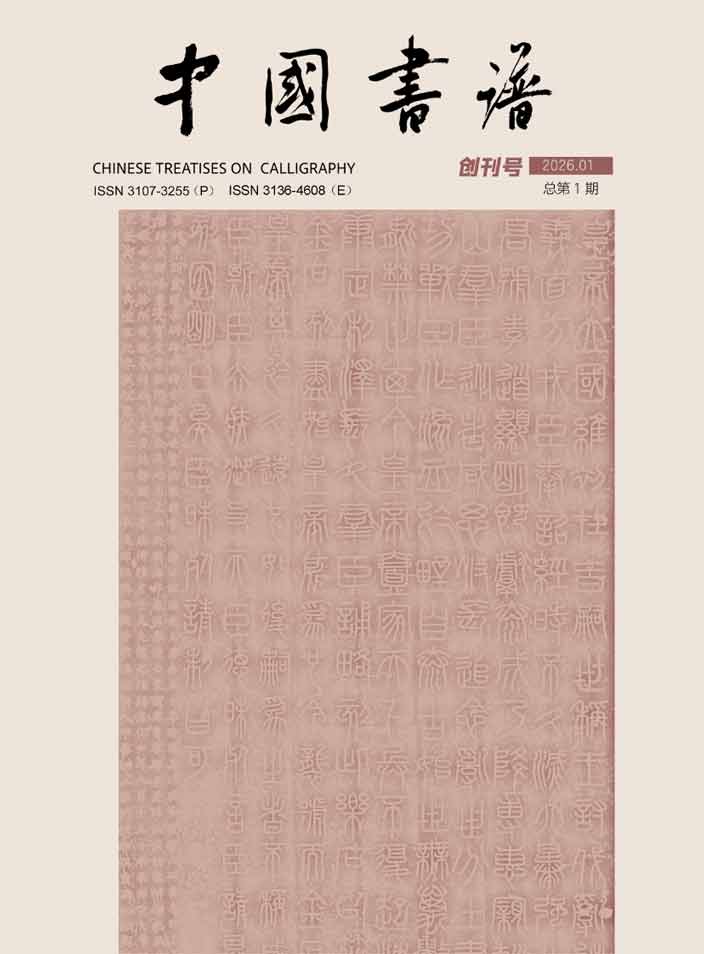
Online ISSN:3136-4608 Print ISSN:3107-3255
Publication place: Hong Kong, China
Publication period: Bimonthly
Joumal Type: Open Access
Language: Chinese
Online ISSN:3136-4608 Print ISSN:3107-3255
Publication place: Hong Kong, China
Publication period: Bimonthly
Joumal Type: Open Access
Language: Chinese
Chinese Treatises on Calligraphy (《中国书谱》,ISSN 3107-3255)is a professional journal dedicated to academic research on calligraphy, with its core mission being the inheritance and promotion of the Chinese calligraphic tradition. It deeply explores the Chinese theoretical system of calligraphy, focusing on both the ontology of calligraphy and interdisciplinary frontiers. Committed to academic rigor, originality, and professionalism, the journal strives to refine the disciplinary system and academic discourse of calligraphy studies, aiming to establish a high-quality scholarly platform that integrates historical depth, theoretical insight, documentary value, and international perspectives.
Its column framework is grounded in theoretical research, supported by the study of steles and rubbings, while also encompassing cutting-edge scholarship, archival collation, and academic services. The journal covers calligraphy history, studies of calligraphers and schools, calligraphic theory and aesthetics, steles, rubbings, and codicology, seal carving and epigraphy, calligraphy education and disciplinary construction, as well as contemporary critical studies on calligraphy.
To address the problem of "emphasizing technical skills over moral cultivation" in primary and secondary school calligraphy education, this study, grounded in the traditional educational philosophy of "nurturing righteousness through enlightenment" (Meng Yi Yang Zheng), establishes the core educational concept of "cultivating righteousness through calligraphy" (Yi Shu Yang Zheng). It constructs a "Four-Dimensions-in-One" educational model that deeply integrates cultural immersion, cognitive construction, emotional awakening, and behavioral formation. The model adopts four primary implementation pathways—emulating the moral character of master calligraphers, guidance through aesthetic values, emotional engagement with textual content, and daily embodied practice—to facilitate the systematic advancement and life-oriented integration of moral development. Based on years of teaching practice and empirical research, this study systematically elaborates on the specific strategies and practical pathways for each dimension, thereby providing a replicable and scalable practical framework for achieving the goal of "integrating artistic and moral development" in primary and secondary school calligraphy education.
Before the invention of paper, bamboo and wooden slips constituted one of the most convenient and practical writing carriers adopted by ancient people. In the 1950s, the precious "Three Sets of Wuwei Slips" were unearthed successively in Wuwei. These slips preserve early handwritten characters and serve as vital references for the study of ancient calligraphy. Research on the calligraphic features of Chinese characters on bamboo and wooden slips carries great practical significance for the inheritance and innovation of calligraphy in Wuwei, the whole Northwest region, and even the whole country.
Chu bamboo and silk manuscripts constitute key physical relics witnessing the transformation from seal script to clerical script in the Pre-Qin period. A survey of southern Chu ink writings including the Baoshan, Guodian, Tsinghua bamboo slips and Zidanku silk manuscript reveals that their character radicals, structural paradigms and aesthetic origins of brushwork can all be traced back to standard bronze seal inscriptions on the King Wangshengguo Bells and bird-and-insect seal script on the Prince Wu Ding Vessels unearthed from the Xichuan Danxi River basin of the Spring and Autumn Period.Based on copying practice and physical specimens from slip and bamboo calligraphy dictionaries, this paper establishes a chronological axis spanning Xichuan Spring and Autumn Chu bronze inscriptions→ regional Chu bamboo slips of the Warring States→ Chu silk manuscripts and Han bamboo slips of the Qin and Han dynasties. It clarifies the three-stage evolutionary logic of Chu slip calligraphy: consistent stylistic inheritance, regional differentiation, and cursive-clerical transformation. The paper distinguishes the brushwork genes that differentiate Chu slips from Qin slips, sorts out the font evolution path of Chu seal script—cursive seal script—Chu clerical script, and objectively defines the historical status of Xichuan Chu bronze inscriptions as the archetype of southern Chu writing. Avoiding biased regional overpraise, this study reconstructs the complete evolutionary vein of Chu bamboo slip calligraphy from three dimensions: calligraphic form, character construction radicals and brushwork aesthetics.
Xu Wei's calligraphy-and-literature integrated works, which combine calligraphic form with literary connotations, fall into two primary categories. The first consists of poems inscribed on paintings. While preserving the unique artistic essence of traditional calligraphy, such works also embody cultural and emotional sustenance on a literary level. Taking these inscribed poems as a starting point to explore Xu Wei's aesthetic pursuits not only rests on solid academic foundations but also profoundly reveals the profound influence and inherent shaping of the aesthetic concepts of his era on his artistic thinking.The second category encompasses theoretical writings on calligraphy, including his treatises on calligraphy, inscriptions and colophons. A systematic collation and interpretation of his calligraphic ideas further demonstrates the diversity of creative approaches to calligraphy shaped by the pluralistic aesthetic trends of the late Ming Dynasty. A timeless tenet in classical Chinese calligraphy theory states:"Calligraphy is the likeness of the self." This assertion lays bare the core essence of calligraphy art: the overall stylistic features of a calligraphic work are never mere isolated formal elements, but maintain a profound internal correspondence with the creator's moral cultivation and existential state.
Sun Xingyan was a renowned epigraphic scholar of the Qianlong-Jiaqing period in the Qing dynasty and a typical representative of the Qianlong-Jiaqing textual research school. Throughout his life, he traveled extensively to regions rich in ancient sites, including Shaanxi, Shanxi, Henan, Shandong, and the capital Beijing. Wherever he went, he personally visited and collected inscriptions and stone relics, resulting in an exceptionally extensive collection. Based primarily on Sun's work Records of Visiting Steles Across the World, this article systematically identifies various methods through which he acquired epigraphic materials—such as field visits, gifts from friends, and purchases. Drawing also upon Hong Yixuan's Ping Jin Du Bei Ji, which records Sun's catalogues and annotations of his collections, the study comprehensively analyzes the overall scale, chronological distribution, and geographical origins of Sun's lifetime epigraphic holdings. Building on this foundation, it further examines the distinctive characteristics of his collection—particularly its strong emphasis on Qin, Han, Sui, and Tang dynasty steles while neglecting Song and Yuan dynasty works—and thoroughly explains the underlying reasons for the breadth and depth of his collection from four perspectives: his commitment to on-site exploration, the advantages of his official travels, his extensive network of scholarly contacts, and the support provided by his staff in military offices. This analysis clarifies Sun Xingyan's significant role within the Qing dynasty's system of collecting and documenting epigraphic materials.
running script on paper, 33 cm × 89 cm, Liaoning Provincial Museum collection